















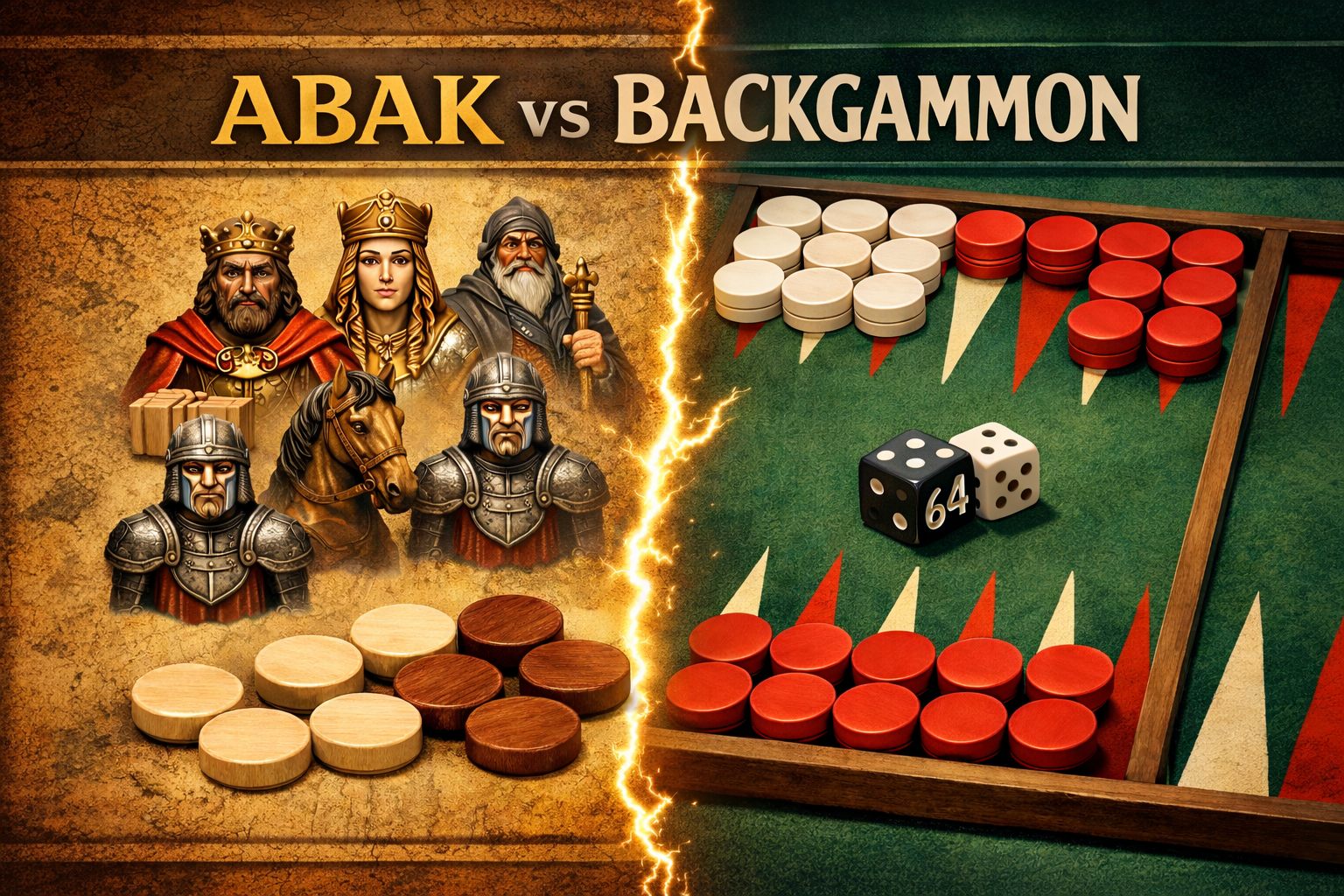
If you know how to play backgammon, you're already 90% of the way to playing Abak Evolution. But that remaining 10% changes everything. Let's dive deep into what makes Abak a true evolution of the world's oldest board game.
The Same Foundation
Abak Evolution is built entirely on top of classic backgammon rules. Everything you know about backgammon applies:
Same board with 24 points
Same dice mechanics
Same bearing off process
Same doubling cube
Same gammon and backgammon scoring
If you can play backgammon, you can play Abak. The transition is seamless because the base rules are identical.
What Changes in Abak
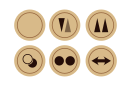
Abak Evolution introduces classes of checkers. Instead of 15 identical pieces, each player has 15 checkers of 6 different types, each with unique abilities:
This single change — giving identity to each checker — creates a cascade of new strategic possibilities.
The Six Classes

Soldier (×9)
The standard checker. Identical to a classic backgammon piece. You have nine of them — still the backbone of your army.

General (×1)
The General can move both forward AND backward. This unique ability makes it incredibly versatile for defense, timing, and rescue operations.
Restrictions: It can only move in one direction per turn. If it goes backward, it can't move again that turn. It can't go backward if all other checkers are home.


Guards (×2)
Guards are like two soldiers in one — they block a point by themselves, without needing a companion. This makes them powerful anchors.
Weaknesses: They can be hit by other Guards, trapped by Druids, and two non-Guard soldiers can capture them if both land on the Guard in the same turn.


Druid (×1)
The most feared piece. In the outer board, the Druid doesn't hit opponents — it immobilizes them. A trapped checker cannot move until the Druid leaves.
Inside either home board, the Druid behaves as a regular soldier. Its power lies in the midfield, where it can lock down key opponent checkers.


Even Wounded (×1)
Can only move even numbers (2, 4, 6). This restriction makes it predictable and easy to block, but it can move any number when entering from the bar or bearing off.
It always moves between points of the same color — hence its symbol.


Odd Wounded (×1)
Can only move odd numbers (1, 3, 5). Like its even counterpart, it's predictable and blockable, but free when entering from the bar or bearing off.
It always moves between points of different colors — hence its symbol.

The Y-Axis: A New Dimension
In classic backgammon, the order of checkers on a point doesn't matter. In Abak, it matters enormously.
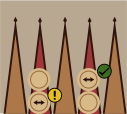
Only the top checker of each stack can move first. This means the vertical order (Y-axis) of your checkers adds an entirely new dimension to the game.
Stack Order A
Stack Order B
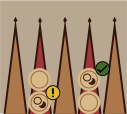
Two stacks with the same checkers in different orders can lead to completely different outcomes. The order of your moves within a turn becomes a critical strategic decision.
This is perhaps the most profound change Abak introduces — it transforms a one-dimensional board into a two-dimensional battlefield.
Deeper Strategic Depth
Classic backgammon has approximately 18 billion possible board positions. Abak Evolution has exponentially more, because:
Each checker has a unique identity, multiplying positional combinations.
The vertical order of checkers on each point matters.
Different classes create new tactical interactions (trapping, blocking, restricted movement).
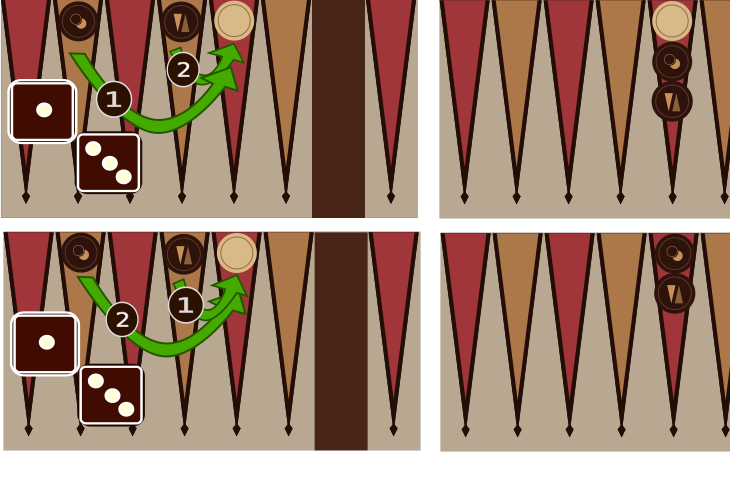
This means Abak rewards deeper thinking. Players must consider not only WHERE to move but WHICH checker to move and in WHAT ORDER.
Different Starting Position
Classic Backgammon
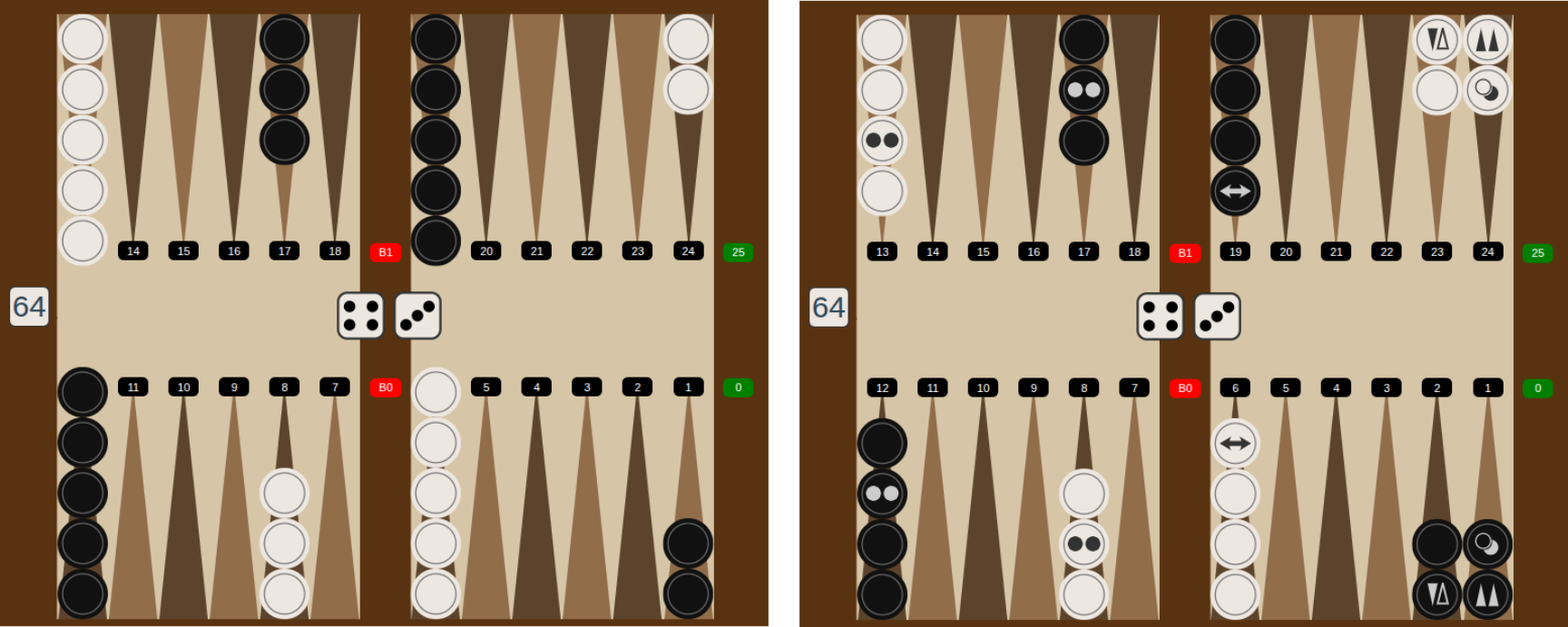
Classic backgammon starts with: 2 on point 24, 5 on point 13, 3 on point 8, 5 on point 6.
Abak Evolution
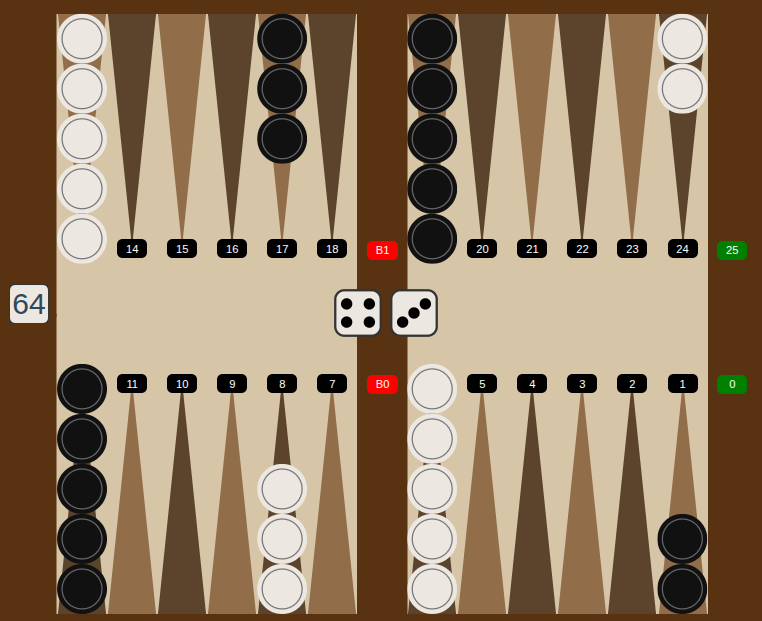
Abak Evolution starts with: 4 soldiers in the back (instead of 2), and rearranges the initial position to accommodate the special classes.
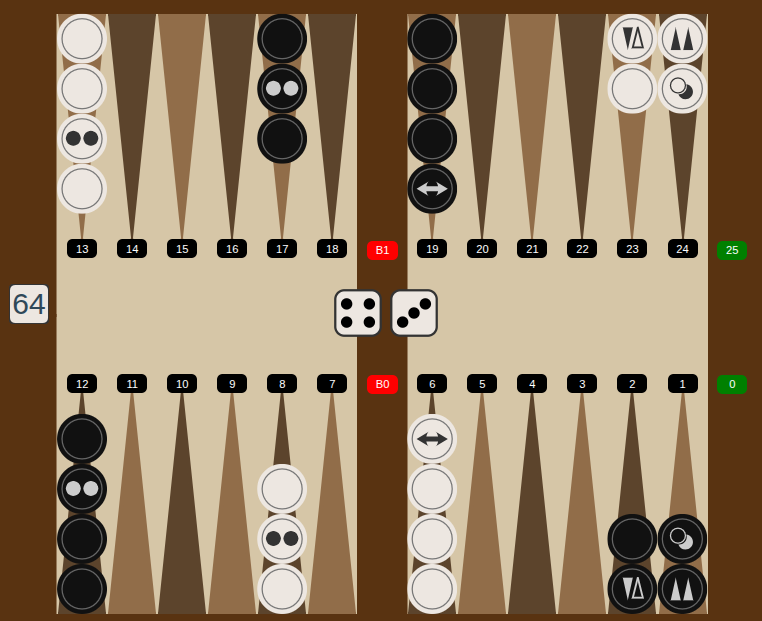
The different setup creates new opening dynamics and early-game strategies.
The Egyptian Rule
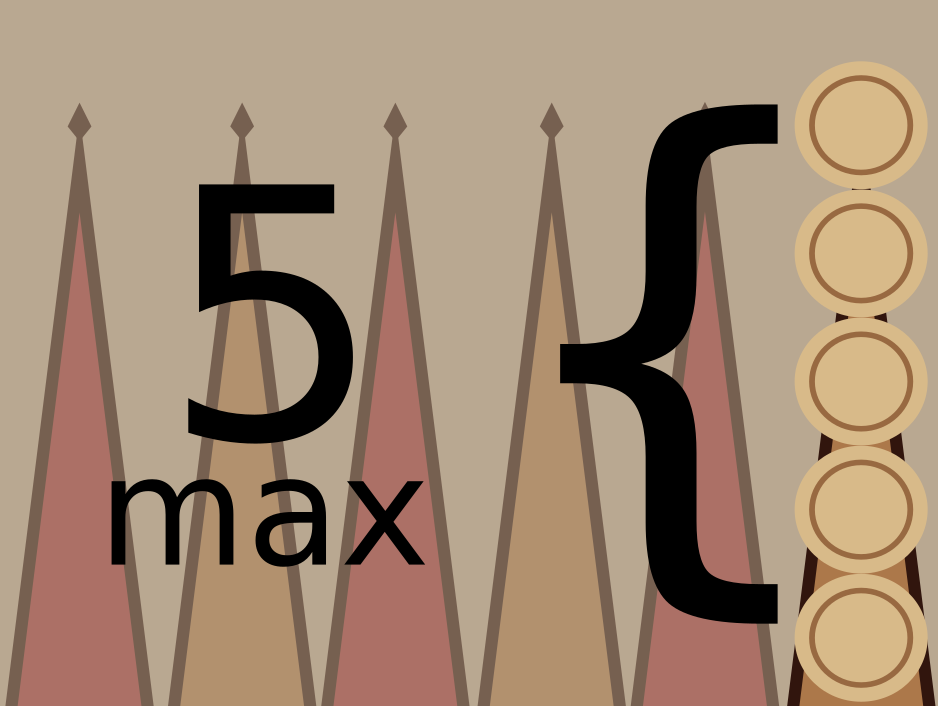
Abak implements a 5-checker limit per point. You cannot stack more than 5 checkers on any single position in the field.
This rule prevents excessive stacking and adds another layer of strategic planning, especially during bearing off.
The Learning Curve
If you already play backgammon, learning Abak takes about 15 minutes. The interactive tutorials at abak.me walk you through each checker class step by step.
If you're new to backgammon, Abak's tutorial system teaches you classic backgammon first, then introduces the Abak classes — so you learn both games at once.
The biggest mental shift is learning to think about the Y-axis and the order of moves. Once that clicks, the game opens up beautifully.
Side-by-Side Comparison
| Feature | Classic Backgammon | Abak Evolution |
|---|---|---|
| Checkers | 15 identical | 15 with 6 classes |
| Movement | Forward only | Forward + backward (General) |
| Trapping | None | Druid immobilizes |
| Blocking | Need 2+ checkers | Guards block alone |
| Movement Restriction | None | Wounded (odd/even only) |
| Y-Axis | Not relevant | Critical strategic element |
| Stacking Limit | Unlimited | 5 per point |
| Possible Positions | ~18 billion | Exponentially more |
Why Make the Switch?
Backgammon is a brilliant game, but after thousands of games, the patterns become familiar. Abak Evolution preserves the soul of backgammon while injecting fresh strategic challenges.
Every checker class creates new stories: the Druid locking down your opponent's advance, the General dancing backward to save a critical position, the Wounded limping home against all odds.
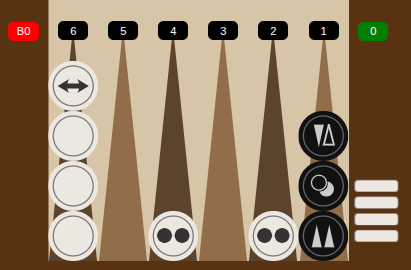
If you love backgammon and want to feel that excitement of discovery again, Abak is waiting for you.
Try it yourself — play Abak Evolution for free at abak.me!